FUNDRAISING ADVICE FROM THE PROS (VOL. 1)
Fundraising is HARD 🫠, we’re here to help! Looking for more? Tune into our podcast 🎙️on Saturdays for a look behind the curtain of fundraising from the very people writing the checks!
1. How to Start + How to Roadmap Your Raise
- Plan ahead. Fundraising from a position of strength (we have a great opportunity / we have runway, but know we will eventually need capital to get to the next level), is MUCH easier than fundraising from a position of desperation (we’ve already burned through cash / things aren’t going well and we need money to make it right asap).
- Know your “why” and your “how much.” Investors want clarity: why you’re raising, what milestones this capital gets you to, and how long that runway lasts.
- Start conversations early. The best investor relationships begin months (sometimes years) before you actually ask for money.
- Expect distraction. Do not chase every channel or trend mid-raise. Simplify and make the story easy to follow. Don’t set yourself up for failure by spreading yourself too thin. Protect the “proof” and leave space for the “promise.”
- Give yourself time and expect it to take longer than you think. Depending on your stage and fundraising strategy, fundraising could take months to a year+.
- Understand the investor landscape: do your research before outreach. What funds actually make sense for your check size, focus, stage of business, and business dynamics.
- Line up those warm intros! Friendly introductions through mutuals is what investors typically prefer. It gives them confidence the conversation is pre-vetted, and will be a lot easier than sending hundreds of cold emails (which you might have to do too)!
2. How Strong Your Business Needs to Be
- The first question you should be asking yourself is “Are we even fundable right now?”
- Understand where your business strengths and weaknesses are, how you compare to the competitive landscape, and what your business narrative is from a metrics standpoint (not just mission and marketing). Is the numbers story compelling enough?
- Signals matter more than perfection. Investors don’t expect you to have perfect numbers, but they want to see you have a good understanding of your business, positive direction, discipline, and momentum.
- Traction is king and shows up in different ways: velocities, repeat purchases, reviews, retailer feedback, etc. Can you prove consumers have high affinity for your products and that they will continue to? This de-risks an investment.
- Be ready to sell the vision in the context of an asset (not just your vision as a founder, which is also important). If you were going to put money in the stock market, what would you care about? Ask yourself how your company exits? Why will it be a desirable asset from a business perspective? How will someone else make money off of this business?
- Be honest about stage fit. Not every great business is venture-backable. Some are amazing but better suited to angels, revenue-based financing, or bootstrapping. If you have strong performance but your revenue is too low or your exit potential is nontraditional, consider walking with an alternate round of financing before you try to run with traditional institutional capital.
- You must be organized. Have clean data, a clear understanding of the metrics of your business, and be in control of your business fundamentals. You wouldn’t go to an interview in flip flops and a bathing suit, so don’t go into a fundraise with messy business operations.
3. What Materials to Prepare + What Diligence Really Looks Like
- Your deck needs two things: clarity and coherence. No fluff, no 50-slide journeys, just a clean narrative with metrics to support it. Aim for 5-10 slides of the most critical information for someone to understand what you are doing, why it matters, how you’ve proven it has been successful, and how it will continue to be so.
- Build a “memo version” of your business. Investors love when a founder can summarize the entire company in a short, structured document.
- Know your numbers cold:
- Sales, velocities, repeat purchases, etc.
- Gross margin vs. contribution margin
- Trade spend and channel nuances
- Burn, runway, and working capital needs
- Profitability
- Be intellectually honest. Don’t try to spin things or cover up less attractive metrics. When you don’t know something, follow-up versus fake it. When your business has a weakness, understand it, have an action plan, and present it as an area of opportunity to improve the business.
- Be ready for deep diligence. Expect investors to talk to retailers, your existing angels, your co-man, your buyers, and sometimes even your customers. Be prepared to share financials and other data requests (especially supporting information for metrics you have already shared).
- Have your data room prepped: P&L, cash flow, cap table, forecasts, manufacturing contracts, sales data, SPINS/Nielsen where relevant.
4. What Matters Most to Investors
- Clarity beats complexity. Investors consistently say the founders who win are the ones who communicate simply and directly.
- Conviction matters. If you aren’t confident in your thesis, investors won’t be either. Just make sure that confidence comes with a healthy dose of open mindedness as well (you are looking for a “partner” after all)!
- Execution > ideas. Great decks get attention and strong operators get checks.
- Traction = proof. Investors need a reason to believe in your company. That means strong growth rates, good margins, strong customer demand, etc.
- Business fundamentals is the name of the game. You need to understand the driving forces behind your company’s financial success and have a financial-based plan that you are executing against (i.e. what does next year look like in detail from a P&L standpoint, what about the next three years?).
- Founder–investor fit is everything. You should be evaluating the partnership with as much critical thinking as they are. They are evaluating:
- Does this founder listen?
- Do they know what they don’t know?
- Are they resilient, will they be able to perform when times get tough?
- Are they someone I want to work with for 5–10 years?
- Trust and honesty matter. You are being evaluated as much as your business is, sometimes more. You are the person they are betting on to achieve the plans you laid out. Represent yourself in a way that instills confidence in your ability to run and lead a business.
5. The Implications of Fundraising (AKA: Welcome to the Merry-Go-Round)
- Fundraising is not a one-time event, it’s a commitment. Once you take institutional capital, you’re agreeing to a multi-year growth journey. That means accountability to metrics, likely a need for additional fundraising, expectations for business operations and reporting, etc.
- You are now in a 5-10+ year relationship. Investors call it a marriage for a reason.
- Your goals must align with theirs:
- Are you building for acquisition?
- Are you trying to scale aggressively?
- Are you prepared for board governance, reporting, and accountability?
- Capital increases pressure. The more you raise, the more you must grow, and the more your optionality narrows.
- Understand what funding means for your equity. Feel confident about dilution implications, be realistic about additional fundraising and what dilution will be like then too. Make sure your incentives are aligned with the funding you are seeking.
- Raising money shouldn’t be automatic. Many amazing businesses work beautifully without the venture treadmill.
6. Empower Yourself
- Investors see hundreds, if not thousands, of deals a year and only back a handful.
- Many passes have nothing to do with founder quality or product strength, sometimes it’s fund timing, ownership targets, category fatigue, or bandwidth.
- Founders cannot take fundraising personally. It’s always important to learn and adjust to what is not working, but do not internalize rejections.
- Macro matters: channel shifts, retailer resets, M&A slowdowns, consumer trends, strategic appetites, etc. influence fundraising more than founders realize.
- “Right time, right place” is a real factor. Part of fundraising is luck. The rest is preparation.
- Yes, you need money. But, this isn’t charity. They are getting a first-class ticket on your rocketship. Don’t be arrogant, but don’t let the need for green cause you to lose your confidence or agency.
- Think about investors like long-term business partners, not like ATMs. Mentally evaluate them the same way you would a potential hire.
- And remember: “no” will be heard many times, and is often not about you or your business. Be resilient. Sometimes, it only takes one “yes” 💪
INVESTOR SPOTLIGHT: BEN ZISES, SUPERANGEL.FUND
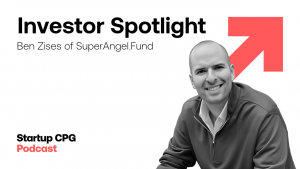
SuperAngel.Fund backs founders at the very beginning. Unlike traditional venture firms, SuperAngel.Fund is a solo-GP firm led by Ben Zises, who is conviction-driven and seeks to write the first check into breakout consumer brands and commerce tech companies. Ben partners with founders who demonstrate clarity, grit, and the ability to execute. Founders gain access to deep pattern recognition formed across 150+ early-stage investments, zero-to-one product strategy, early retail navigation, capital planning and go-to-market sequencing.
SuperAngel.Fund supports companies long before scale, helping founders sharpen their model, validate real demand, and make the right early hires and channel decisions. More than capital, the fund provides a trusted partner and champion: someone who understands the messy middle of founding, where every dollar, decision, and day matters.
In addition to backing consumer brands, SuperAngel.Fund invests in the enabling tools, platforms, and infrastructure that power the next generation of emerging brands. These investments give the fund unmatched visibility into what’s working across digital acquisition, retail deployment, data infrastructure, and operational excellence, meaning portfolio founders benefit from real-time feedback loops and tested playbooks that compound value over time.
At its core, SuperAngel.Fund exists to empower high-upside founders at their earliest and most critical inflection point, when belief matters most, and the right partner can shape the entire trajectory of the company. The fund focuses on broad diversification, investing early, staying close, and doubling down when it sees breakout growth and positive data emerge.
Based on its storied track record, their Fund II is now backed by the AngelList Systematic Fund-of-Funds, which leverages proprietary data, predictive modeling, and quantitative analysis across 25,000 funds and 13,000 startups on the AngelList platform, and ranks them in the top 1%.
Recent investments highlighting SuperAngel.Fund’s focus include:
- 🍓 Feel Goods: All-natural supplements built for Gen Z [Consumer]
- 💦 Rorra: A modern water filtration company [Consumer]
- 🥣 Man Cereal: Creatine-infused, high-protein cereal for men [Consumer]
- 📊 Marathon Data: Brand measurement & marketing platform [Commerce Tech]
- 🛒 Hetal: Retail audit, analytics & execution platform [Commerce Tech]
💡 Fresh Take of the Week From SuperAngel.Fund: “After 150+ investments, the pattern is clear: breakout companies don’t start big, they start focused. One problem, one customer, one channel. In Consumer, a great product isn’t enough, you still need to master ops, supply chain, marketing, distribution, and cash flow discipline to win.”
🎙️Tune into our podcast with Ben Zises of SuperAngel.Fund, one of the most seasoned early-stage consumer angels and investors out there. We dig into how he evaluates founders at the very beginning, what separates a good idea from a fundable one, why clarity beats complicated narratives, and the signals he looks for when deciding who to back. Ben breaks down what makes a pitch deck stand out, how to communicate your story with conviction, and why consistent investor updates can shape your next round.
📞Call the Ledger Line – Your Monthly CPG Accounting Tip
Sell-in vs. Sell-through: What’s the real difference?
🔮 CPA says: Sell-in = how much you sold to the retailer. Sell-through = how much the retailer actually sold to consumers.
📉 High sell-in + low sell-through = trouble (aka overstock risk, markdowns, unhappy buyers).
📈 High sell-in + high sell-through = real consumer demand (aka “traction”).